
Fix Panasonic AC Error F97: Compressor Overheating Repair Guide
Diagnostic Protocol & Repair Guide
Technician Note
Always isolate power before inspecting high-voltage components.
System Fault Detected: Fix Panasonic AC Error F97: Compressor Overheating Repair Guide
Continuing to run equipment with this active code may void warranties or cause permanent mechanical failure.
Solved: Panasonic AC Error F97
The Complete Guide to Fixing Compressor Overheating Faults. Condenser Diagnostics, Gas Checks, and Sensor Testing.
Introduction to Panasonic AC Error F97
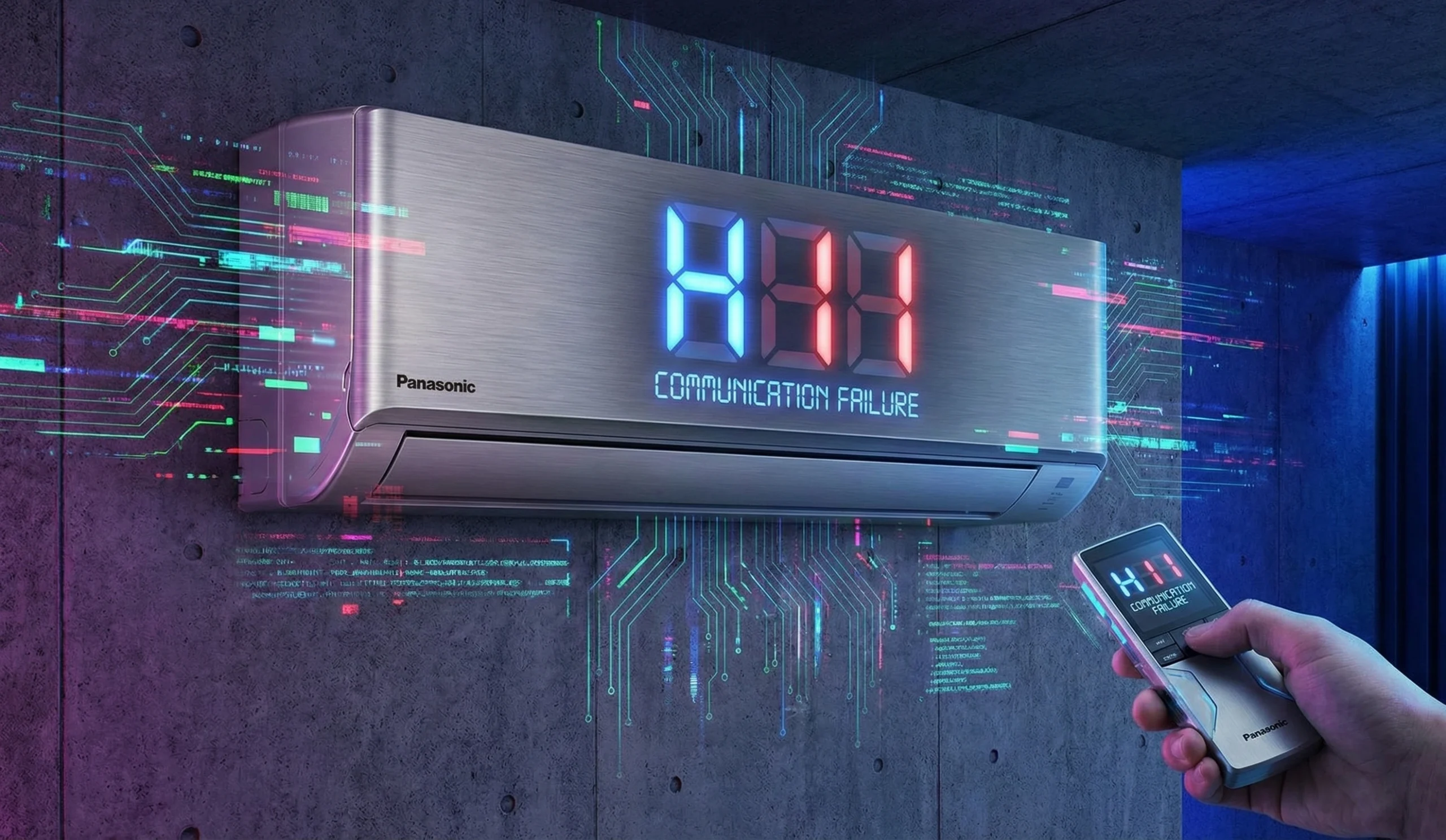
The Panasonic AC Error F97 is a highly critical protection mode indicating Compressor Overheating Protection. The heart of your air conditioner, the compressor, is monitored by a discharge pipe temperature sensor located directly on its top casing.
Under normal operation, the compressor is cooled by the cool refrigerant gas returning from the indoor unit. If the Discharge Pipe Temperature Sensor detects that the compressor’s casing temperature has exceeded approximately 112°C (233°F), the outdoor PCB instantly shuts off the compressor to prevent the internal motor windings from melting and the lubricating oil from breaking down into acid.
Step-by-Step Diagnostic Procedure
Step 1: Check for Low Refrigerant Gas
The most frequent cause of an F97 error is a lack of refrigerant (freon).
- The compressor relies on the cold return gas to cool its internal motor. When the gas leaks out, the compressor pumps almost entirely air, generating massive friction and heat.
- Action: A technician must attach manifold gauges to the outdoor unit. If the standing pressure is significantly lower than normal (e.g., below 100 PSI for R32), a leak test must be conducted before recharging.
Step 2: Inspect the Outdoor Condenser & Fan
If the heat pulled from your house cannot be exhausted outside, it backs up into the compressor.
- Dirty Coil: If the outdoor aluminum fins are blocked by mud, dust, or debris, the heat cannot escape. Clean the coil with a jet wash.
- Outdoor Fan Motor: Ensure the outdoor fan is spinning at high speed. If the fan capacitor (or DC fan motor) is failing, the compressor will overheat within 10-15 minutes of turning on.
Step 3: Discharge Temperature Sensor Test
Sometimes the compressor isn’t actually overheating; the sensor is just lying to the PCB.
| Test Point (Multimeter Ohms) | Expected Reading at 25°C | Diagnosis |
|---|---|---|
| Discharge Pipe Thermistor | Approx. 40kΩ – 60kΩ (Model Dependent) | If it reads completely out of range (e.g., 5kΩ or 0Ω), the sensor has failed and must be replaced. |
Step 4: Check for Refrigeration Cycle Blockages
If the gas is full and the condenser is clean, there may be a physical blockage in the system restricting flow.
A choked capillary tube or a stuck Electronic Expansion Valve (EEV) will cause the compressor to pump against a dead end. This skyrockets the head pressure and causes immediate overheating. Fixing this requires recovering the gas, replacing the blocked component via brazing, and deeply vacuuming the system.
DIY Repair vs. Professional Service
Pros of Professional Repair
- ✓ Accurate Gas Diagnosis: Differentiating between a blocked capillary tube and a low-gas leak requires high-pressure manifold gauges.
- ✓ Leak Detection: If gas is low, professionals will perform a nitrogen pressure test to find the leak before wasting money on a refill.
- ✓ Deep Vacuuming: When replacing blocked parts, professionals use a high-cfm vacuum pump to remove all moisture, protecting the compressor oil.
- ✓ Sensor Calibration: Using the exact OEM Panasonic thermistor with the correct high-heat resistance curve ensures the F97 error doesn’t return falsely.
- ✓ Safe Condenser Wash: Professional outdoor coil cleaning avoids bending the delicate aluminum fins.
Cons of DIY (Do It Yourself)
- ✗ Wrong Sensor Resistance: Installing a generic 10kΩ sensor instead of the specific Panasonic high-temp sensor will cause the compressor to burn out permanently.
- ✗ Bypassing Safety: Attempting to short or bypass the discharge sensor will bypass the safety lock, resulting in a literal compressor explosion or fire.
- ✗ Improper Gas Top-up: R32 and R410A are blended refrigerants. “Topping them up” blindly without a vacuum ruins the chemical balance and increases head pressure further.
- ✗ Bending the Fins: Scrubbing the aluminum coil with a stiff brush will bend the fins flat, permanently destroying airflow.
- ✗ High Voltage Risk: Removing the outdoor PCB to access the sensor plugs exposes you to 380V DC on the inverter capacitors.
Estimated Repair & Parts Pricing
| Product / Service | Details | Estimated Cost | Action |
|---|---|---|---|
| Discharge Pipe Thermistor | OEM high-temperature sensor for compressor | $20 – $40 | Check Price |
| Refrigerant Leak Fix & Refill | Fix flare nuts, vacuum, recharge R32 gas | $80 – $150 | Book Service |
| Outdoor Condenser Chemical Wash | Deep cleaning to restore heat dissipation | $40 – $70 | Book Service |
| Capillary Tube Replacement | Fixing blockages (includes brazing & gas) | $120 – $200 | Book Service |
* Prices vary based on AC tonnage, accessibility, and local market labor rates.
Related Panasonic Error Codes
Frequently Asked Questions
1. What is the most common cause of F97?
A severe lack of refrigerant (gas) is the most common cause. Without gas to cool the motor, the compressor overheats rapidly and the discharge sensor trips the F97 error.
2. Can a dirty outdoor unit cause F97?
Yes. If the outdoor condenser fins are clogged with dirt, heat cannot escape into the air. The heat backs up into the compressor, causing it to overheat and trip.
3. How do I test the discharge temperature sensor?
You must unplug it from the outdoor PCB and measure its resistance with a multimeter. At room temperature, it usually reads much higher than indoor sensors (e.g., 40kΩ to 60kΩ). If it reads 0 ohms, it is shorted and broken.
4. Can I bypass the F97 error to get cooling?
Never attempt to bypass the discharge sensor. F97 is the only thing preventing your compressor windings from melting and causing a catastrophic failure or fire.
5. Why does the AC run for 15 minutes before showing F97?
It takes time for the solid metal mass of the compressor to heat up. It starts cool, but without adequate gas or airflow, the temperature slowly climbs until it hits the 112°C threshold and shuts down.
6. How do I reset the F97 code?
Turn off the mains power breaker. You must wait for the compressor to physically cool down (which can take 30 to 60 minutes) before turning it back on, otherwise the hot sensor will trigger F97 instantly.
7. Can a bad outdoor fan motor cause this error?
Yes. If the outdoor fan stops spinning, no air is pulled across the condenser coils. The head pressure and temperature will skyrocket immediately.
8. I just had my AC serviced and now I get F97. Why?
The technician likely overcharged the refrigerant or introduced moisture/air into the system by not vacuuming it properly. Non-condensable air in the system causes severe overheating.
9. Does Atlas Aircons fix F97 errors?
Yes. Our technicians carry manifold gauges for proper gas diagnostics, nitrogen for leak testing, and OEM Panasonic replacement thermistors.
10. What is a capillary tube choke?
The capillary tube is a very narrow copper pipe that expands the gas. If debris or sludge blocks it, the compressor pumps against a dead end, creating massive heat and tripping the F97 code.
Bypass The Downtime
Do not waste hours deciphering manuals. The Atlas Aircon engineering squad has successfully cleared the Fix Panasonic AC Error F97: Compressor Overheating Repair Guide across multiple industrial sites. We can dispatch a technician to your facility immediately.
GET LIVE TROUBLESHOOTING⚡ ISO 9001:2015 Certified Diagnostic Team